How to Choose the Right Milling Machine for Your Workshop
February 19, 2026
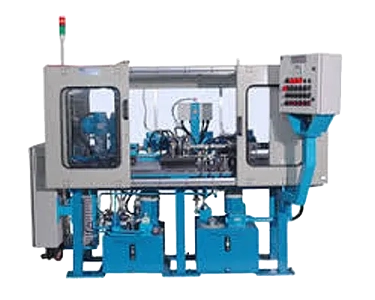
Special Purpose Machines (SPMs) are custom-engineered industrial machines built for a specific manufacturing task. Unlike general-purpose machines such as standard lathes or milling machines, SPMs are designed from the ground up to perform a single operation — or a tightly defined sequence of operations — with maximum efficiency, precision, and repeatability.
At Amanjas, we design and manufacture SPMs tailored to your exact production requirements. Every machine is developed through close consultation with your engineering team to ensure it integrates seamlessly with your existing production line and delivers measurable improvements in throughput and quality.
Before diving into the benefits, it's important to understand what makes SPMs fundamentally different from standard machinery:
If you're running a high-volume production line, SPMs can be a game-changer. Here's why:
SPMs eliminate the setup changes, manual adjustments, and operator decisions that slow down general-purpose machines. By dedicating every motion and mechanism to a single part, cycle times are minimised. Multi-station SPMs can complete complex components in a single setup — operations that might require multiple machines and setups on a conventional line.
Dedicated tooling, fixed tool paths, and controlled machining parameters mean every single part comes out virtually identical. This level of repeatability is simply unachievable on a general-purpose machine where operator technique and manual setup variations introduce part-to-part inconsistency. For industries like automotive, aerospace, and precision engineering, this consistency is non-negotiable.
While the upfront investment in an SPM is higher than a standard machine, the per-part cost drops dramatically at production volumes. Reduced cycle times, lower labour requirements, minimal scrap, and consistent quality all contribute to an excellent return on investment — typically realised within 12–18 months for high-volume applications.
SPMs automate repetitive operations, reducing the need for skilled machinists on the shop floor. One operator can oversee multiple SPMs simultaneously. This is particularly valuable in an era where skilled manufacturing labour is in high demand and short supply.
With automated loading, clamping, and machining cycles, operators spend less time in the danger zone near moving machine elements. Guarding and safety interlocks can be integrated directly into the SPM design from the outset, creating a safer working environment compared to retrofitting safety measures onto general-purpose machines.
Modern SPMs are often designed with scalability in mind. You can start with a single station and add more stations as production volumes grow. Modular SPM lines can be reconfigured to accommodate part variations, making them a future-proof investment.
SPMs are used across a wide range of industries, but they deliver the most value where volumes are high and consistency is critical:
Every SPM project at Amanjas follows a structured, collaborative process:
One of our clients in the automotive component sector replaced a 6-machine conventional line with a single 4-station SPM for machining a gearbox housing. The results:
Our Custom Special Purpose Machines are engineered to deliver results like these for your specific application. From concept to commissioning, we handle the complete lifecycle — design, fabrication, assembly, testing, and operator training.
Fill in your details and our team will get back to you shortly.
Chat with us!
Typically replies instantly
Welcome to our site, if you need help simply reply to this message, we are online and ready to help.